

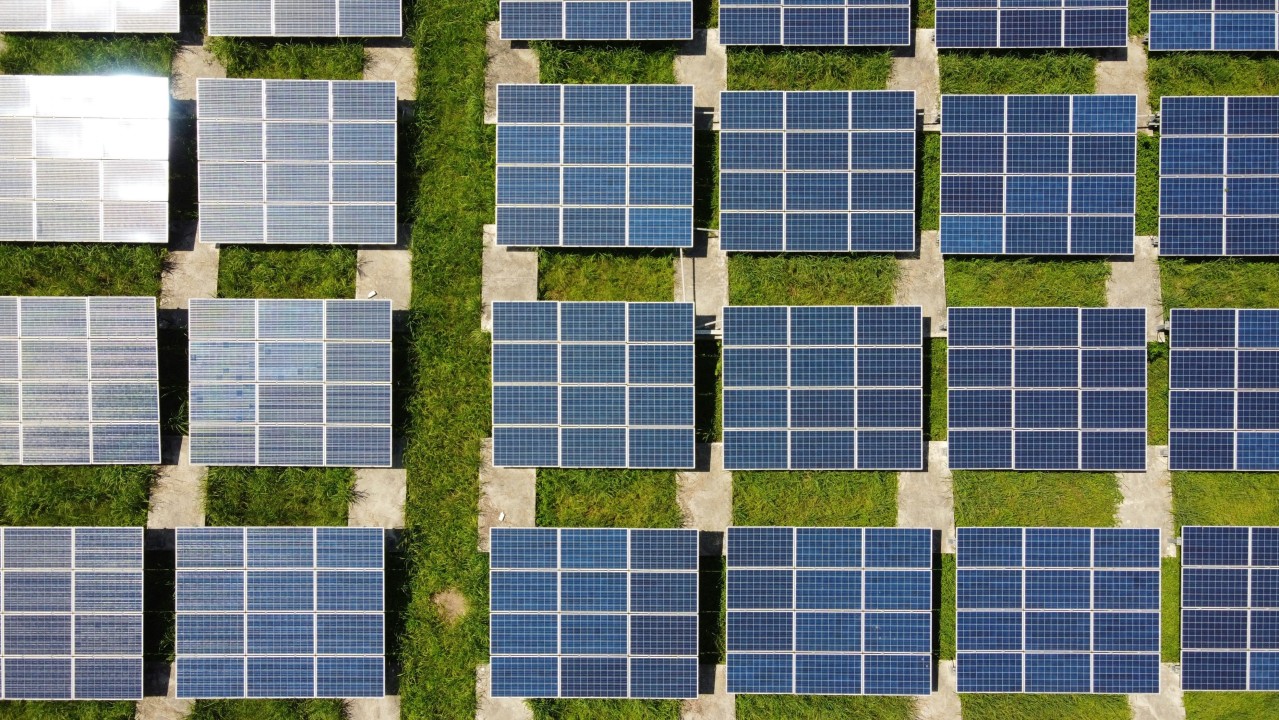

Africa is no longer the “next” frontier for clean energy, it is the current one.
Africa’s electrification efforts have shown moderate progress, with access increasing from 54% to 60% between 2018 and 2023. Despite this gradual improvement, nearly 600 million people across the continent still lack reliable electricity. This persistent gap is driven by a mix of financial constraints, underdeveloped infrastructure, and regulatory hurdles, all made worse by a rapidly growing population.
Africa represents a powerful convergence of need, opportunity, and urgency. The scale of the challenge is matched by the scale of the opportunity to leapfrog into a clean, decentralised energy future that powers homes, businesses, and industries.
Bridging the Capital Gap: Why International Investment Is Not Optional
Africa’s energy challenge is not due to a lack of ideas, innovation, or even policy, it is overwhelmingly a capital access problem.
According to the IEA, sub-Saharan Africa needs $25–30 billion annually in clean energy investment to meet universal energy access targets by 2030. However, actual annual flows hover around $5–7 billion, creating a funding shortfall of over $20 billion per year.
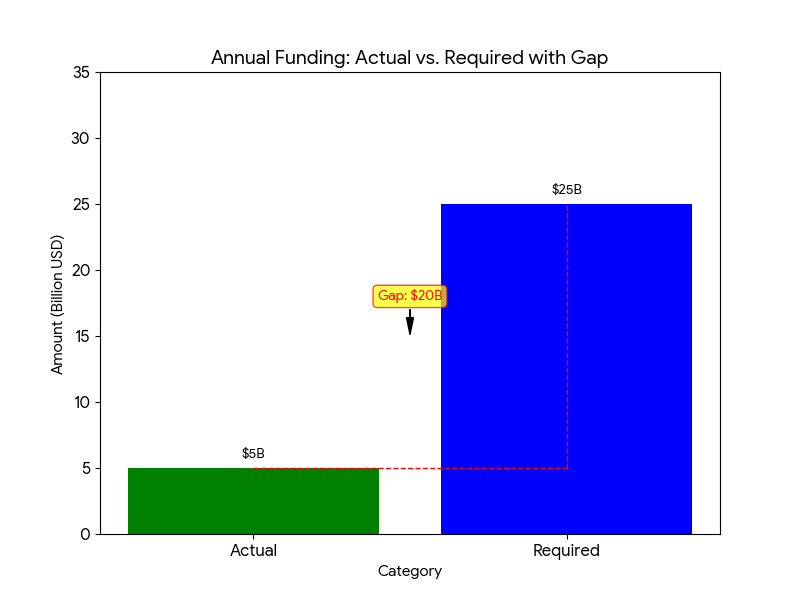
That’s not a gap. That’s a gaping hole in the global energy transition.
Meanwhile, over 85% of global clean energy investment still goes to developed markets (mostly in OECD countries)despite the fact that:
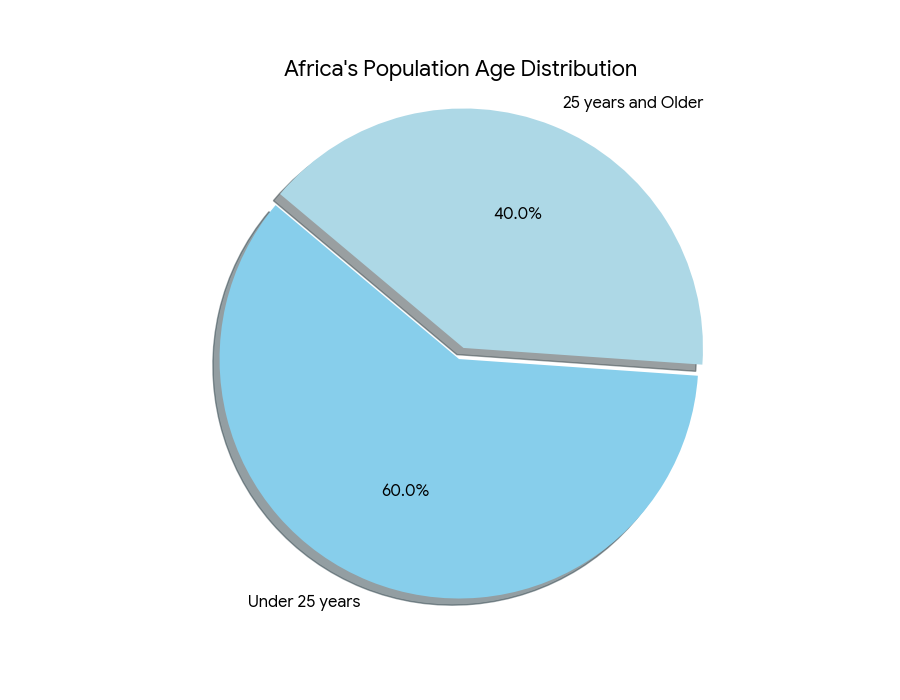
- Africa has the youngest population in the world. About 60 percent of people are under age 25. The median age is around 19 years.
- Africa also accounts for the world’s largest electricity access gap. Roughly 600 million people remain without power, three quarters of the global total.
- Despite this, the continent holds massive energy potential, especially in solar and geothermal resources. These remain largely untapped.
- It stands to gain the most from distributed, off-grid innovation.
Domestic capital markets across Africa cannot bridge this gap alone. International capital must play a catalytic role. This is not a philanthropic duty; it is a smart, strategic allocation of capital. Yet for global investors, DFIs, and clean energy funds, one issue continues to dominate the conversation: risk perception.
This article explores how global capital can confidently participate in Africa’s clean energy transformation, achieving strong returns while avoiding operational nightmares.
The solution lies not in risk avoidance, but in intelligent structuring and informed execution.
The Real Risk Perception Gap
Africa is often misjudged. Risk is not just about politics or currency, it’s about how projects are structured. While headlines may focus on instability or regulatory gaps, seasoned operators understand that the real friction lies in collections, execution discipline, and long-term performance. For most investors, the biggest blind spot is not the macro, it’s the micro: uptime, receivables, and cash flow timing.
As a key stakeholder, I’ve seen firsthand that:
- The biggest risk isn’t expropriation. It’s poor collections. If cash doesn’t come in, nothing else matters.
- Currency fluctuation blocks many deals but underinvestment in operations and maintenance kills the ones that get built.
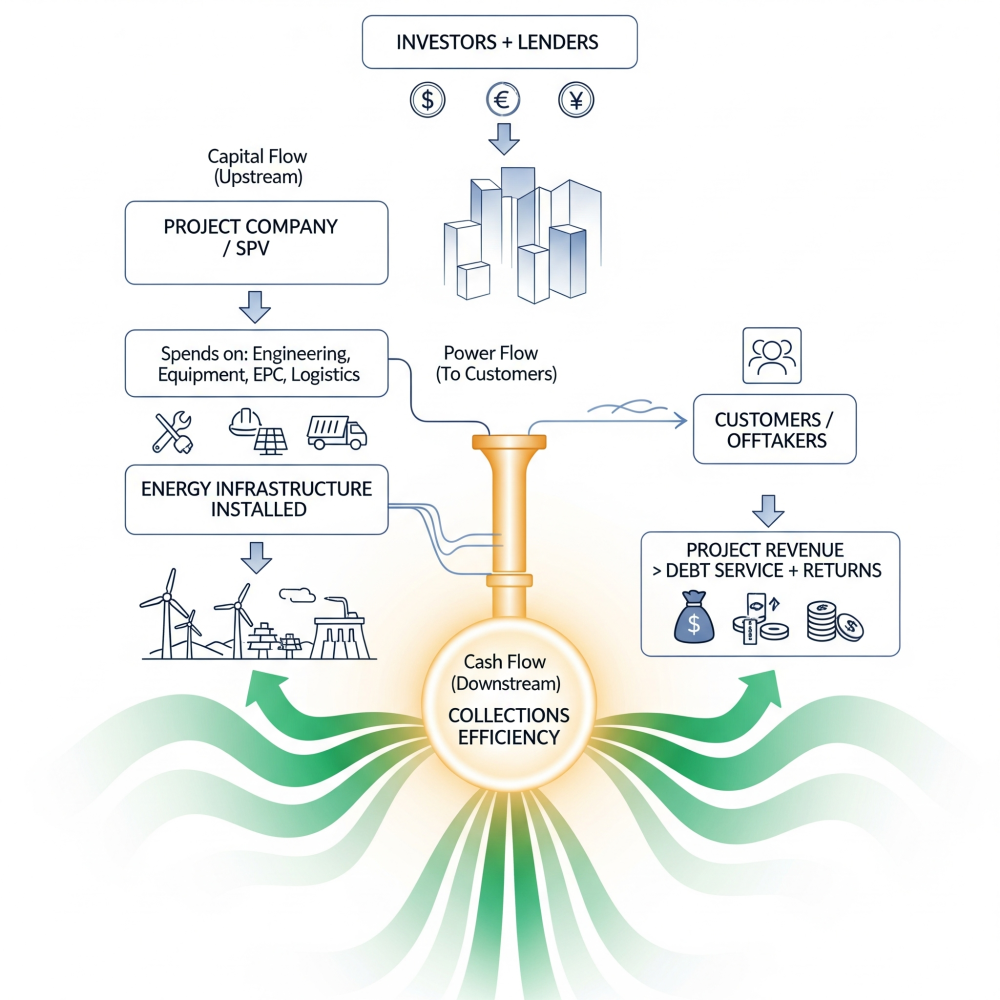
- Most capital flows upstream into equipment and infrastructure. But every return depends on downstream cash (collections) from customers.
This is where most energy models break and why local execution is everything.Cash flows in upfront, secured by downstream collections
Six Proven Strategies to De-risk Clean Energy Investment in Africa
1. Design for Collections Efficiency
Energy can be delivered. Systems can be in place. But if CASH isn’t collected efficiently, the entire model collapses (eventually). Even when some customers pay in cash, successful collection depends on structured systems digital billing, transparent tracking, and consistent follow-up. Without that, cash leaks out of the business.
Collections must be treated like sales. They require strategy, follow-up, and human engagement. Digital tools help, but local teams and behavioural insight close the loop. Current approaches often miss the mark. They focus on usage, not intent. They mostly assume payment, rather than ensure it. In some cases, there’s simply not enough trained personnel to do the “leg” work – following up, engaging, and collecting.
According to the World Bank, “Improving utilities’ bill‐collection performance is a critical prerequisite for financial viability and universal access.”
What works in practice:
- Smart meters with remote disconnection
- Apps, Cheques, Mobile money, USSD, and cash; customers must have all available payment channels at their fingertips
- Automated billing linked to usage
- Prepaid and hybrid billing systems
- Escrow-based revenue collection with waterfall payment priority
- Local agents and field teams that drive collections like sales (with performance targets)
2. Deploy Blended Finance to Absorb Early-Stage Risk
Blended finance combines concessional capital with commercial investment to make high-impact, clean energy projects viable. It tiers risk so that private investors can participate with reduced downside.
“Blended finance creates investable opportunities in developing countries as a means to deliver more development impact.” — Andrew Herscowitz, former Power Africa Coordinator and development finance executive.
What this looks like in practice:
- DFIs or philanthropic capital take the first‑loss or junior tranche
- Commercial capital deploys into senior or mezzanine layers
- Public sector players may backstop currency or payment risk
- Technical assistance funds strengthen local execution
Why it works:
- Every dollar of concessional or catalytic capital can unlock $5 – $10 in private investment
- It reshapes risk-return profiles so commercial investors can enter previously unbankable markets
3. Back Hybrid Energy Models for Grid-Independent Reliability
Clean energy is key to Africa’s future. But in many places, combining solar with gas or wind and battery storage delivers more stable and affordable power. Hybrid systems work better in real-life conditions. They reduce pressure on unreliable grids, lower running costs, and keep the lights on more consistently.
Why It Matters
- Energy reliability: Ensures uptime even in weak-grid or off-grid settings
- Cost efficiency: Eliminates diesel consumption and reduced long-term operating costs
- Scalability: Modular design allows replication across industrial, retail, and government use cases
- Investor confidence: Indexed PPAs, blended finance, escrow-backed models, and government-backed ISPOs improve bankability
- Risk protection: Secondary credit guarantees, multilateral risk instruments, and support from specialised local financial institutions strengthen investor security and unlock long-term capital
We’re beginning to see more of these hybrid energy systems gaining ground in Nigeria.
In Oyo State, the hybrid power project developed by Elektron Energy Development Strategies Limited combines 4 MW of gas, 1 MWp of solar, and 1MWh BESS. A second phase will expand gas capacity to 10 MW. The plant supplies electricity to government offices, public lighting, and hospitals etc. under a long-term agreement.
Also in Nigeria, Justrite Superstores has installed rooftop hybrid systems at two of its Lagos stores; these systems include solar panels and batteries and are among the first large-scale rooftop energy solutions for retail in West Africa.
Beyond Nigeria, hybrid systems are proving their value in other African countries as well. In Mali, the Fekola gold mine operates one of the continent’s most advanced off-grid hybrid plants combining 68 MW of thermal generation, 30 MW of solar, and 17.3 MW of battery storage.
In Mozambique, the Cuamba Solar-plus-Storage Project, commissioned in 2023, is the country’s first grid-connected hybrid system. It integrates a 19 MWp solar array with 7 MWh of battery storage and supplies clean electricity directly to the national grid under a long-term PPA.
And in South Africa, the Kenhardt project is one of the largest hybrid energy systems on the continent, with 540 MW of solar and 225 MW / 1,140 MWh of battery storage. It supplies power to the national utility, Eskom.
These projects show that hybrid energy systems are not fallback options. They are practical, reliable, and scalable solutions for meeting Africa’s growing energy needs.
4. Insure against Political, Currency, and Credit Risk
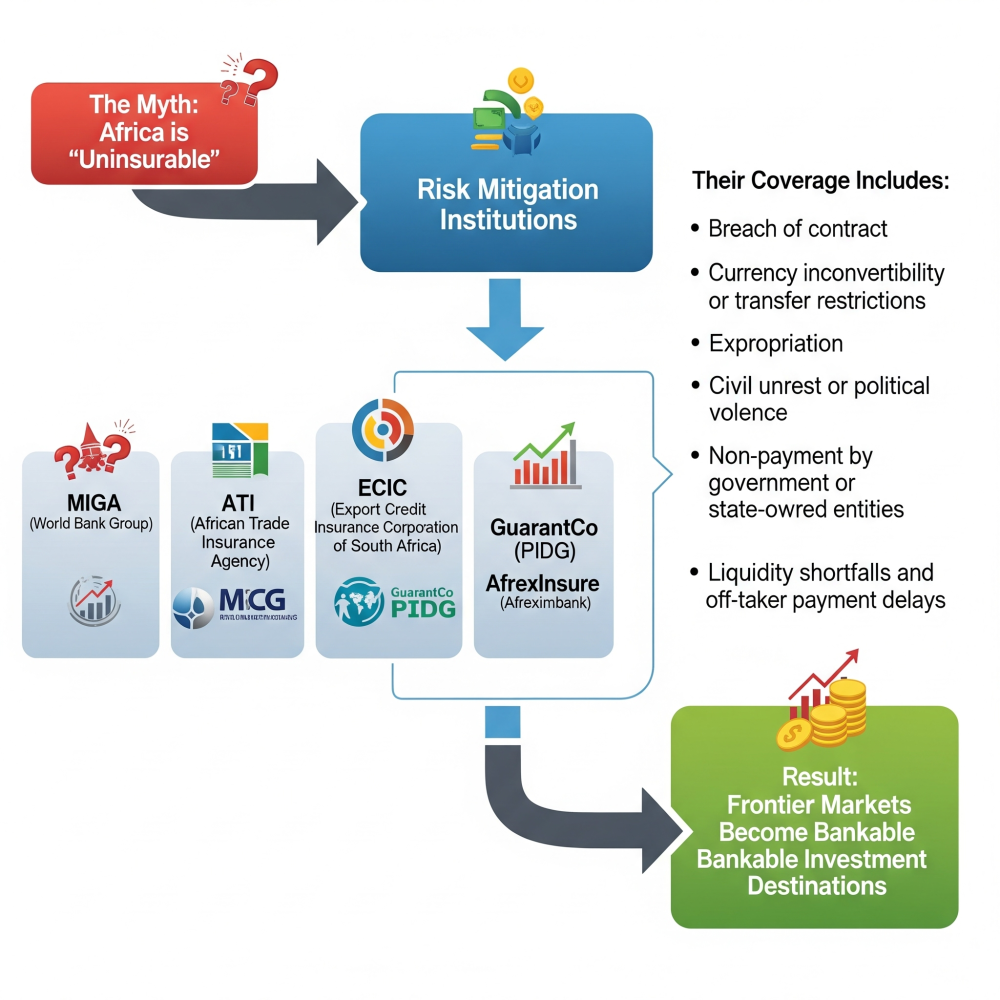
The idea that Africa is “uninsurable” is a myth. In reality, institutions like MIGA (World Bank Group), ATI (African Trade Insurance Agency), ECIC (Export Credit Insurance Corporation of South Africa), GuarantCo (PIDG), and AfrexInsure (Afreximbank) offer proven risk-mitigation tools that help turn so-called “frontier markets” into bankable investment destinations.
Their coverage includes:
- Breach of contract
- Currency inconvertibility or transfer restrictions
- Expropriation
- Civil unrest or political violence
- Non-payment by government or state-owned entities
- Liquidity shortfalls and off-taker payment delays
Case Highlights
- MIGA provided a $98.6 million guarantee for the 100 MW KaXu Solar One project in South Africa, covering political risk and breach of contract. It has also supported multiple utility-scale wind and solar projects under South Africa’s REIPPPP program.
- ATI, through the Africa Energy Guarantee Facility, has helped mobilize over $1.4 billion in energy investment across Africa, offering protection against sovereign payment risk, political instability, and utility default. Notably, it backed the 20 MW Golomoti Solar Plant in Malawi with a liquidity guarantee that enabled $25 million in financing.
- ECIC supports South African export-driven projects with political and credit insurance, complementing structured finance deals especially those involving regional infrastructure or cross-border energy trade.
- GuarantCo provides local currency credit guarantees that enable banks to finance power projects. It has supported mini-grids, solar hybrids, and utility-scale infrastructure, helping unlock local capital for African energy markets.
- AfrexInsure, launched by Afreximbank, provides political and credit risk insurance for large infrastructure and cross-border energy deals. It targets trade-linked energy projects and complements Afreximbank’s broader project finance support.
5. Partner with Execution-Ready Operators, Not Just Consultants
Too much global capital flows to consultants with polished decks. But in Africa’s energy markets, delivery beats theory.
Look for partners with:
- 3–5+ years of in-market execution
- Proven EPC and O&M alliances
- OEM-certified technicians
- Regulatory experience and grid interconnection success
- Real-time digital monitoring for remote diagnostics
“A case study on the Cabeólica wind project in Cabo Verde—executed by InfraCo Africa—cited the importance of selecting a private partner with experience, track record, and well-defined governance structures, noting this was ‘a crucial factor underlying the effectiveness of this public‑private partnership.”
6. O&M Isn’t Just Maintenance — It’s Revenue Insurance
In power projects, operations and maintenance (O&M) isn’t optional — it’s directly tied to how much you earn. Most Power Purchase Agreements (PPAs) / contracts include performance guarantees. If your plant fails to meet agreed availability or output levels, you risk:
- Liquidated damages (LDs)
- Revenue deductions
- Event of default or contract termination
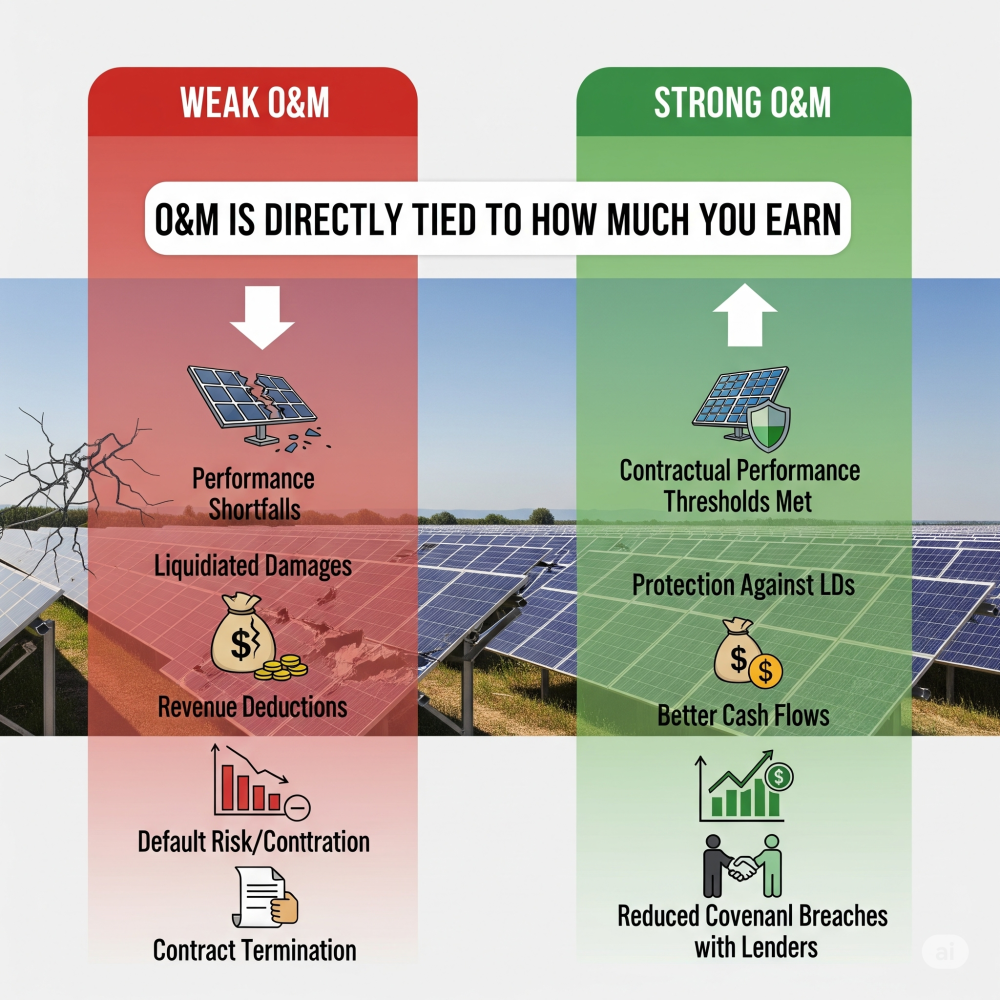
Weak O&M increases the risk of performance shortfalls, triggers liquidated damages, and undermines debt service capacity leading to potential covenant breaches and elevated default risk.
Strong O&M, on the other hand:
- Keeps your plant above contractual performance thresholds
- Protects against LDs
- Guarantees better cash flows
- Reduces risk of covenant breaches with lenders
Reliable O&M signals one thing to the market: you can be trusted to deliver.
Conclusion: From Risk to Return — A Call for Smarter Capital
Africa’s energy future isn’t merely about untapped potential; it’s a challenge of partnership, intelligent design, and masterful execution. The continent undeniably possesses the demand, the abundant resources, and the vibrant talent. What remains essential is capital, the capital that grasps the nuances of complexity, structures projects with foresight, and commits with unwavering, long-term conviction.
Let’s be clear: Clean energy in Africa transcends being a mere ESG checkbox or a philanthropic endeavor. It stands as one of the last true frontiers where capital can generate monumental value at scale, economically, socially, and environmentally.
Investors who dare to build bold, bankable, and genuinely locally grounded projects won’t just unlock exceptional financial returns. They will actively shape the very definition of global infrastructure and inclusive growth for the coming decade.
If you’ve been observing from the sidelines, the moment to lean in is now. The market is prepared. The guiding frameworks are clear. The essential tools are readily available.
All that’s left is for capital to move – confidently, and without a moment’s lost sleep.
Credits/Further reading
Inline Illustrations: Gemini AI, Guarantco (PID), IEA (International Energy Agency) – Africa Energy Outlook 2022, Convergence Blended Finance – State of Blended Finance 2023, Climate Bonds Initiative: Blended Finance Reports, World Bank – MIGA Project Briefs.